
List of Quinceañera Traditions
This list of quinceañera traditions includes everything from the most traditional ceremonies that have been celebrated for decades, to the newer trends that have been included in more recent years!
To plan and organize your timeline of events use our Quinceañera Timeline Tool and download your personalized timeline for free!
Let’s take a closer look at some of the most popular quinceañera reception traditions.
1. The Changing of the Shoes (El Cambio de Zapatos)
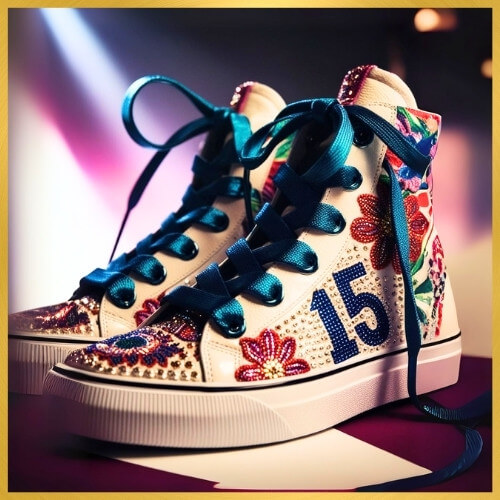
This special moment represents the transformation from childhood to young womanhood. The quinceañera begins the evening in flat shoes, often sneakers that have been personalized with rhinestones, lace, or her party colors. During the reception, someone close to her, traditionally the father switches them out for a beautiful pair of high heels. In modern times, it’s not uncommon for mothers to take on this role.
2. The Last Doll (La Última Muñeca)
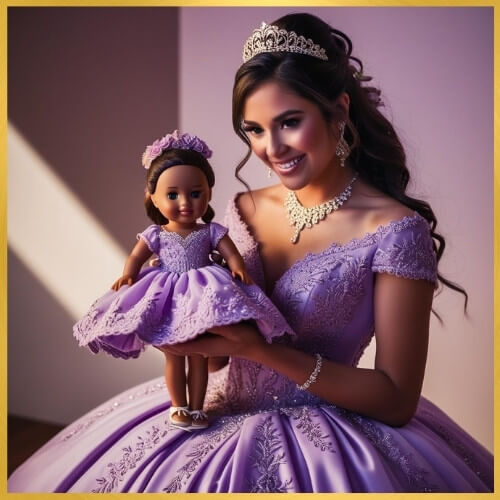
As a symbol of leaving childhood behind, the quinceañera is often presented with a doll, or sometimes a teddy bear dressed to match her gown. In many families, this keepsake is passed on to a younger sister or cousin, who may also be dressed in a complementary outfit to coordinate with the quinceañera. It’s a sweet and sentimental way to symbolize growth and legacy.
3. The Crowning Ceremony (La Coronación)
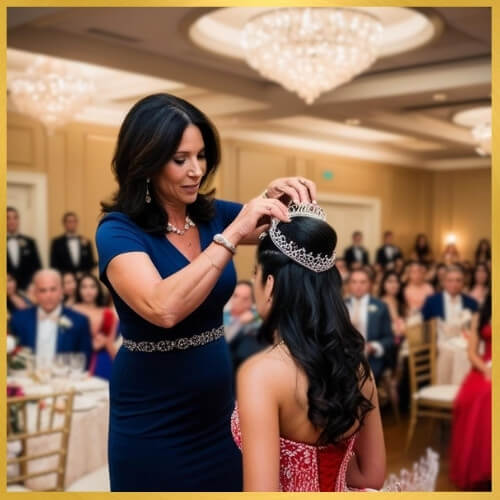
The crowning ceremony highlights the quinceañera’s transition into a more mature role in her family and community. A tiara is placed on her head, usually by her parents or godparents, to symbolize her inner beauty and the respect she has earned as a young woman. There are other variations where the quinceañera places a small tiara on a younger sibling or family member as the next quinceañera in line.
Curious about the role of padrinos and madrinas? Don’t miss our post on the traditional and modern-day responsibilities of padrinos in a quinceañera.
4. Vals con el Papá (Father–Daughter Dance)
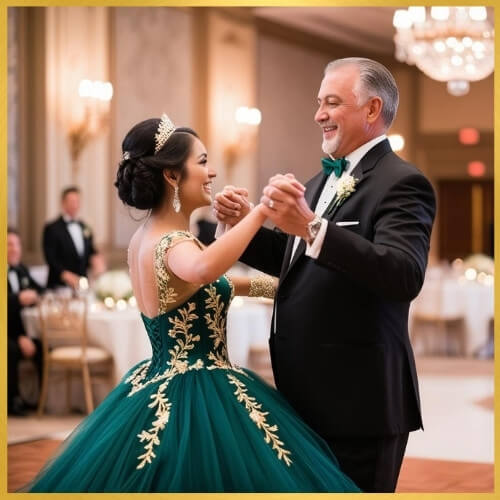
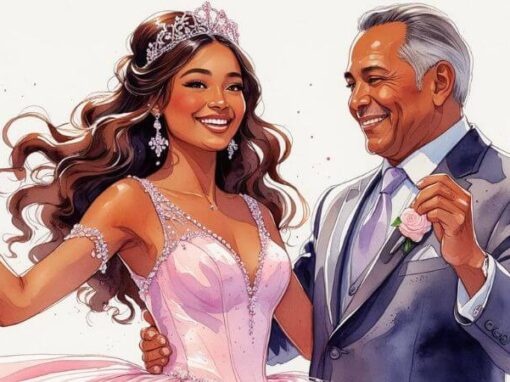
A traditional father-daughter dance often opens the waltz, but many families now include a dance with the mother as well, or even separate dances with both parents. In some communities, it’s also tradition for the quinceañera to dance briefly with multiple male guests as a symbolic welcome into womanhood.
5. Vals con la Corte (Court Waltz)
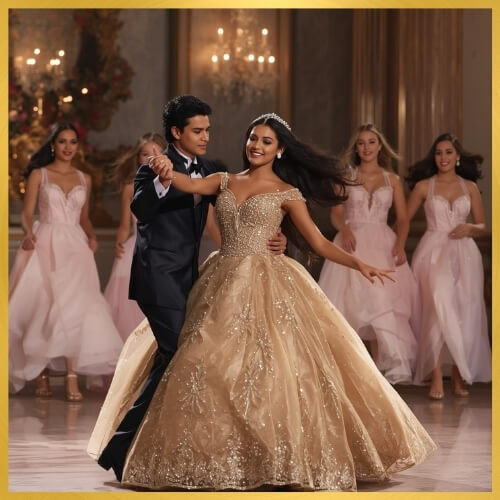
The vals con la corte is one of the signature moments of the reception. The quinceañera and her court perform a choreographed waltz that they practice for weeks or months, to dance at this event. Some families keep it classic and formal, while others mix in modern music or a surprise dance. It's a moment everyone looks forward to.
6. The Toast (El Brindis)
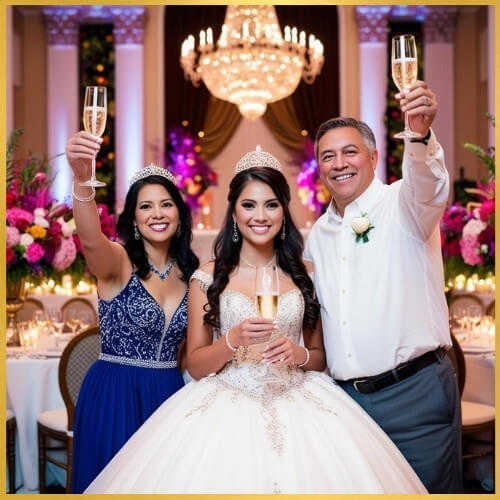
A heartfelt moment where parents, padrinos, and other loved ones raise their glasses and offer blessings, memories, and words of encouragement. The toast sets the emotional tone for the evening and reminds everyone of the love and support that surrounds the quinceañera.
7. The Quinceañera’s Speech
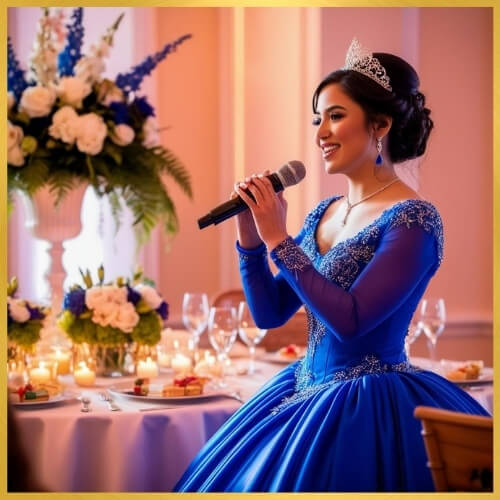
Now it’s the quinceañera’s turn to speak from the heart. In this touching moment, she thanks her family, padrinos, court, and guests for helping her reach this milestone. It’s often emotional, funny, and unforgettable. A chance to reflect on the journey and look ahead. No pressure though! This can be a very quick thank you, or sometimes the parents or someone close may do the talking with the quinceañera by their side to give a brief thank you.
8. The Surprise Dance (El Baile Sorpresa)
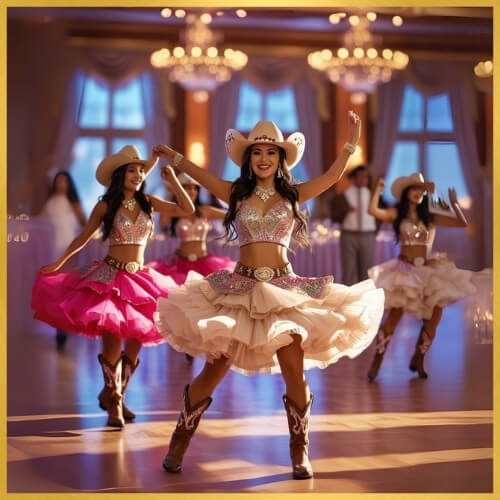
This high-energy segment of the night adds modern flair to the tradition. The quinceañera, along with her court or even family members, performs a fun and unexpected choreographed dance. They usually change into a different outfit, something colorful, sparkly, or themed just for the moment. Sometimes even the mom or dad joins in, making it a true celebration and kicking off the party.
9. The Candle Lighting Ceremony (Ceremonia de las Velas)
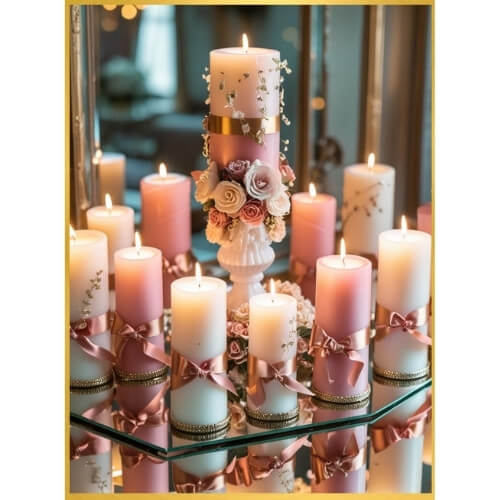
While not part of the original tradition, this newer element has become meaningful to many families. The quinceañera lights a candle for each of 15 special people in her life, often sharing a few words of love and thanks with each one. In some celebrations, instead of candles, roses are handed out to significant individuals, creating a touching and symbolic gesture. Often She will have 14 candles to hand out, and the largest 15th candle being lit for herself.
10. The Grand Entrance
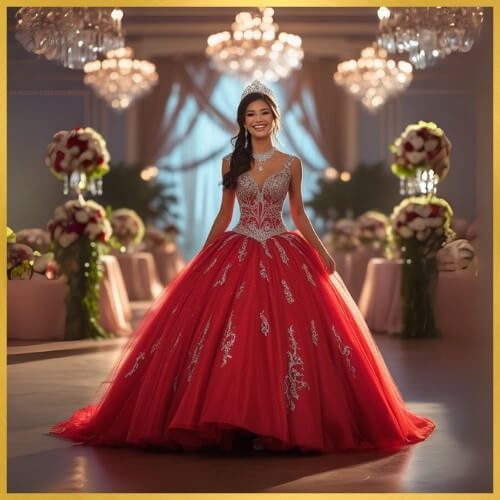
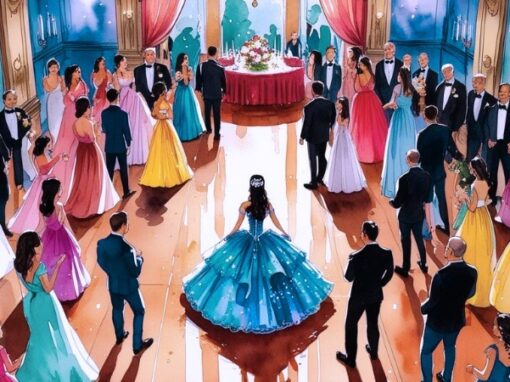
Before the formal festivities begin, the quinceañera often makes a grand entrance, an unforgettable moment where all eyes are on her as she walks into the reception hall for the first time. Whether she arrives alone, with her court, or escorted by her parents, this entrance is a powerful symbol of her transition into young womanhood. The music, lighting, and excitement all help set the tone for the celebration.
11. The Mirror Dance
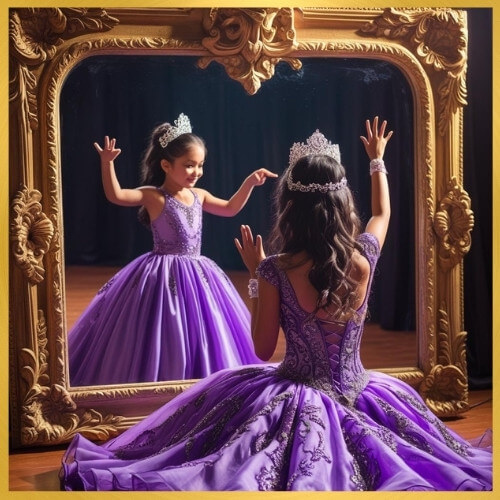
Though less common, the baile del espejo or mirror dance is a beautiful modern tradition some quinceañeras choose to include. In one version, the quinceañera holds a handheld mirror and dances gracefully, reflecting on the young girl she was and the young woman she’s becoming. She sometimes is joined by her father, mother, or padrinos who gently guides her during the dance.
In another variation, the dance is performed with a younger girl in the family, often a little sister or cousin. They face each other with a large decorative frame held between them to symbolize the mirror, moving in unison as if seeing the past and future reflected in one another. This dance symbolizes her transition into womanhood.
Sometimes a silhouette dance is performed instead.
12. Surprise Gift
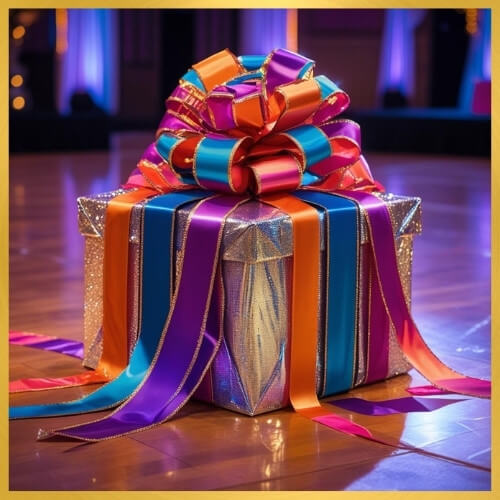
Some families choose to include a regalo sorpresa, or surprise gift, as part of the reception. This can be anything deeply meaningful, a piece of jewelry, a trip, a car, a puppy, or anything that the quinceañera truly wants. It’s Often presented by parents or padrinos. It’s usually given right after the thank you speech or during a special moment in the program.
13. Court of Honor
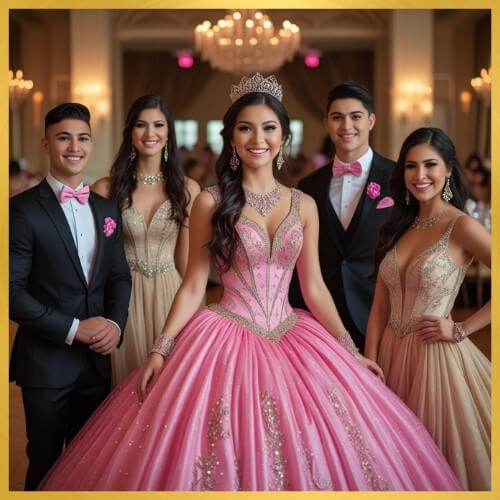
The corte de honor, or court of honor, is one of the most iconic and recognizable parts of a quinceañera celebration. Traditionally made up of damas (girls) and chambelanes (boys), the court accompanies the quinceañera throughout the day, helping her get ready, walking in the entrance, and performing choreographed dances like the waltz and sometimes a fun surprise dance. The court of honor represents the quinceañera’s closest friends and family members who have supported her journey so far, and being chosen is considered an honor for everyone involved.
14. Cake Cutting Tradition
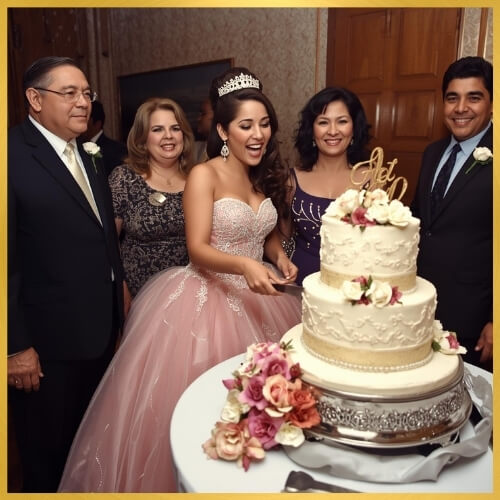
The cake cutting marks a joyful transition from formal traditions into full celebration. The quinceañera usually cuts the cake with her parents, and sometimes padrinos or close family members join in. Whether simple or elaborate, it’s a sweet moment of gratitude and celebration.
15. The Traditional Quinceañera Dress
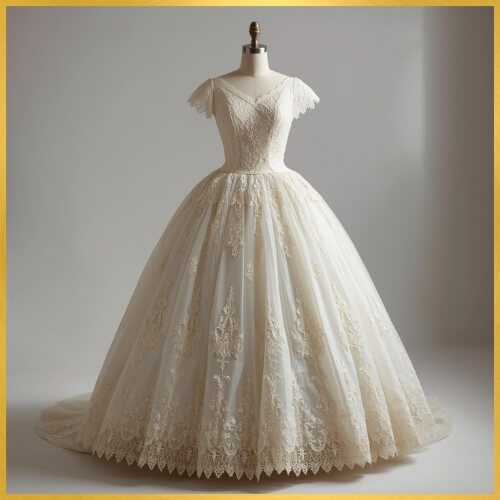
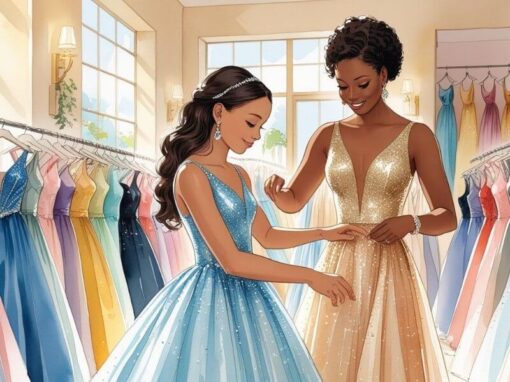
The dress is a tradition all on its own. Years ago, quince gowns were often white, symbolizing formality and purity. Today, colors and styles vary, from soft pastels to bold, statement designs, allowing each quinceañera to express her personality and unique vibe.
Bonus Traditions
While these may not be considered a traditional ceremony, these have become customary or trendy to quinceañera celebrations.
The Table of Honor (Mesa de Honor)
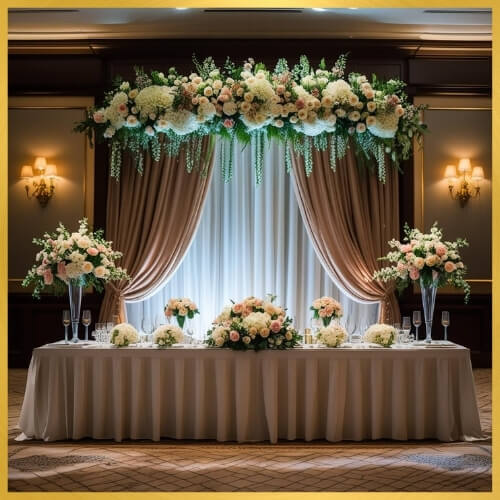
The mesa de honor is usually a beautifully decorated table at the head of the event venue. Depending on the family and region, it may seat the quinceañera and her court, her parents, padrinos, or a mix of all of them. No matter the seating style, the table highlights the people who played a special role in her celebration.
Decorated Brindis Glasses & Champagne Display
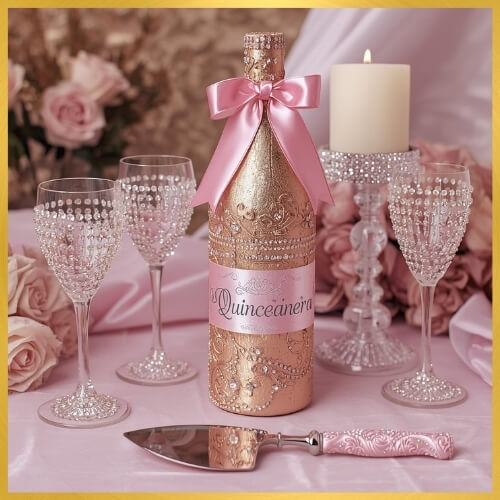
During the brindis (toast), many families decorate the champagne or wine glasses, cups, and bottles to match the theme. These sets are elegant and often include a cake cutter, or other utensils and plates. Usually these are only used by the quinceañera, or those sitting at the table of honor. Sometimes, some of these are extended to other important people, like padrinos, grandparents, or others who helped coordinate the event. They often become keepsakes that the family saves after the celebration.
Quinceañera Merch Store (Tienda Merch)
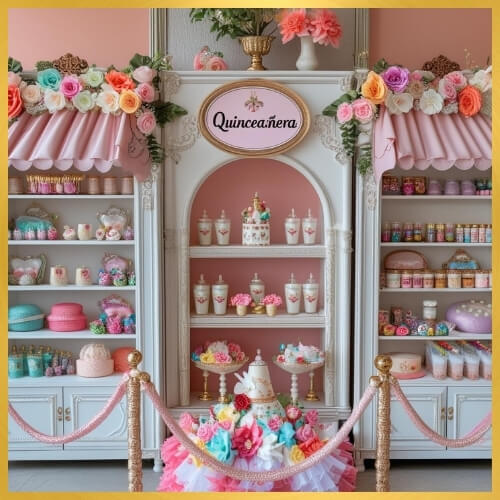
Choose your Own Recuerdo: A newer, creative twist on recuerdos is the quinceañera merch store, a small cute store display where guests choose the souvenir/party favor they like best. Instead of everyone receiving the same favor, families offer practical keepsakes like hats, cups, tote bags, or keychains in the quinceañera’s theme. It keeps the meaning of recuerdos, thanking guests for being part of the day, while giving them something they’ll actually use and enjoy.
Quinceañera Throne Chair (La Silla de la Quinceañera)
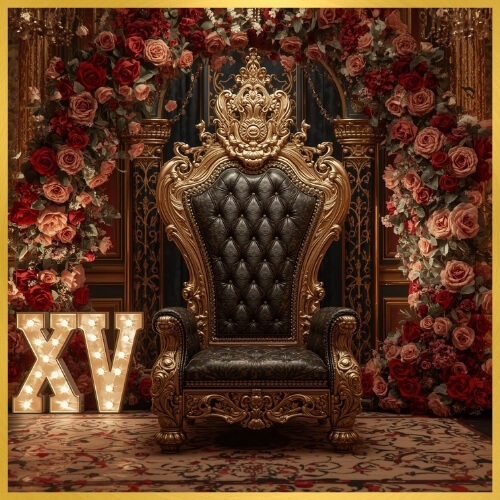
Another popular bonus tradition is the quinceañera throne chair, a statement seat that gives the quinceañera a special place of honor during the reception. Sometimes it’s placed near the dance floor or at the table of honor, and in other celebrations it’s part of a decorated photo area or backdrop.
Lluvia de Sobres (Money Envelope Blessing)
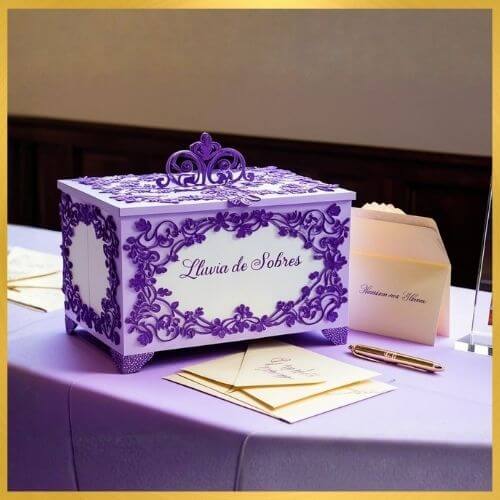
The lluvia de sobres is when guests gift money inside envelopes to help support the quinceañera’s future or simply to allow her to spend the money how she pleases. These Lluvia de Sobres envelopes can sometimes be added to the invitation with a small note card politely asking for a cash gift. Other times, the envelopes are placed on a table next to the Lluvia de Sobres Box, along with pens for guests to name their envelopes or write happy birthday wishes.
View our Lluvia de Sobres Notecards here
Video Montage or Photo Slideshow
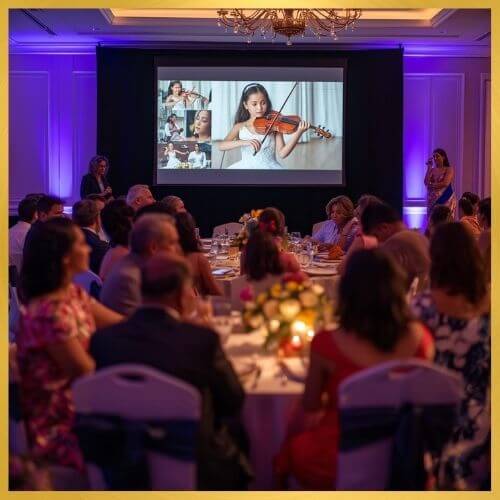
A popular modern addition to many quinceañeras is a video montage or photo slideshow that highlights the quinceañera’s childhood memories, milestones, and family moments. It’s usually played during dinner, before the vals, or as part of a special transition in the program.
Choosing Your Quince Tradition
Whether you choose to honor every tradition or choose only a few, it comes down to preference and how you want to celebrate your own quinceañera. With so many Latin American countries, there are varying traditions in every region and every country that celebrates it. In the end, you can do what feels most meaningful to you and your family!
Ready to Start Planning your Order of Events?
Start planning your traditions with our FREE Quinceañera Timeline Tool
Do you have any special or unique traditions where you’re from? Let us know in the comments below and share with others!
We’ve got a full blog post all about the Quinceañera Mass and its Traditions Here.


0 Comments